Wall, South Dakota: a rollover, a diversion, and the tow that cleared I-90

Daily edition · I-90 corridor — Wall, South Dakota

Published November 4, 2026 · TruckRescueNow daily edition — Day 3

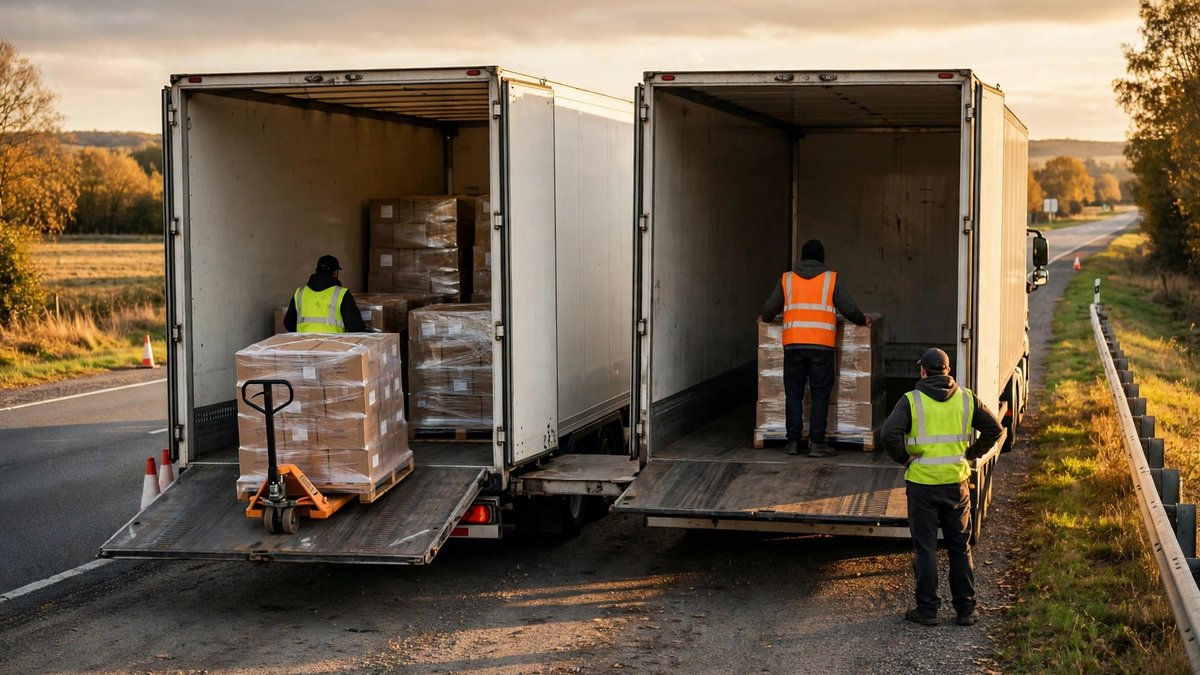
Heavy wrecker and crew transferring a load from a disabled semi truck on the shoulder

Tuesday at mile marker 116

A semi truck rolled onto its driver's side on westbound I-90 near mile marker 116 on Tuesday, in eastern Pennington County by Wall. The truck blocked the entire westbound lane.

The Highway Patrol and the Sheriff's Office reported no serious injuries, and the incident remains under investigation. No cause has been reported, and this piece will not invent one.

What is fully reported is the response — and on this stretch of I-90, the response is the story, because everything about it has to travel to the scene.

Morning Coffee Brief

  • On Tuesday, a semi rolled onto its driver's side near mile marker 116 on westbound I-90 by Wall, South Dakota, blocking the entire westbound lane. The South Dakota Highway Patrol and the Pennington County Sheriff's Office reported no serious injuries.
  • Westbound traffic was diverted off at mile marker 121 onto Big Foot Road while eastbound traffic ran unaffected. Cleanup took several hours, with a towing company brought in to remove the truck and trailer.
  • Wall is the last stop before the Rapid City and Badlands grades, on one of the emptiest stretches of I-90 in the state. Help on this ground is mobile and corridor-based — it drives to the truck, because there is no bench sitting beside it.
A driver at a truck-stop window with breakfast and coffee in front of him, looking out at the trucks

The diversion and the several hours

Westbound motorists were diverted off the interstate at mile marker 121, onto Big Foot Road, while the lane stayed blocked. Eastbound traffic was not affected.

A one-lane blockage on this ground is a different event from the same blockage in a metro. The detour is a local road, the following traffic has no parallel interstate to absorb it, and the queue's only way out is through the work.

Cleanup took several hours. That clock — a loaded interstate reduced to a local-road diversion for an afternoon — is what a single rollover costs a corridor with no spare lanes.

The tow is the clearance

Nothing about a truck and trailer on their side clears itself. A towing company was brought in to remove the rig from the blockage — heavy recovery work: uprighting or winching a loaded combination, clearing the lane surface, and hauling the wreck off the corridor.

Until that work finished, every other fact of the day — the diversion, the delay, the investigation — waited on it. On recovery jobs, the wrecker is not part of the response. The wrecker is the response.

That is the standing shape of this ground: the service that answers here is mobile and corridor-based by design, because the corridor is where the work is.
Roadside service on the I-90 Wall corridor

The services a driver needs on this stretch are the heavy end of the trade: heavy towing and recovery, mobile repair that comes to the truck, and tire service across long distances between stops. The register's receiver for this cell is a mobile corridor receiver that explicitly serves Wall — the model this ground requires.

The cell's own page is semi truck roadside service, heavy towing, and recovery on I-90 at Wall, South Dakota. For the work itself, what a load rescue is explains how a dead truck's freight still moves, and what causes semi truck rollovers — and what prevents them covers the ground Tuesday's investigation has not yet spoken to.

Related guides — From the road — the daily edition