Driver guide · National edition
Published October 30, 2026 · TruckRescueNow driver guide bank, stamped October 2026
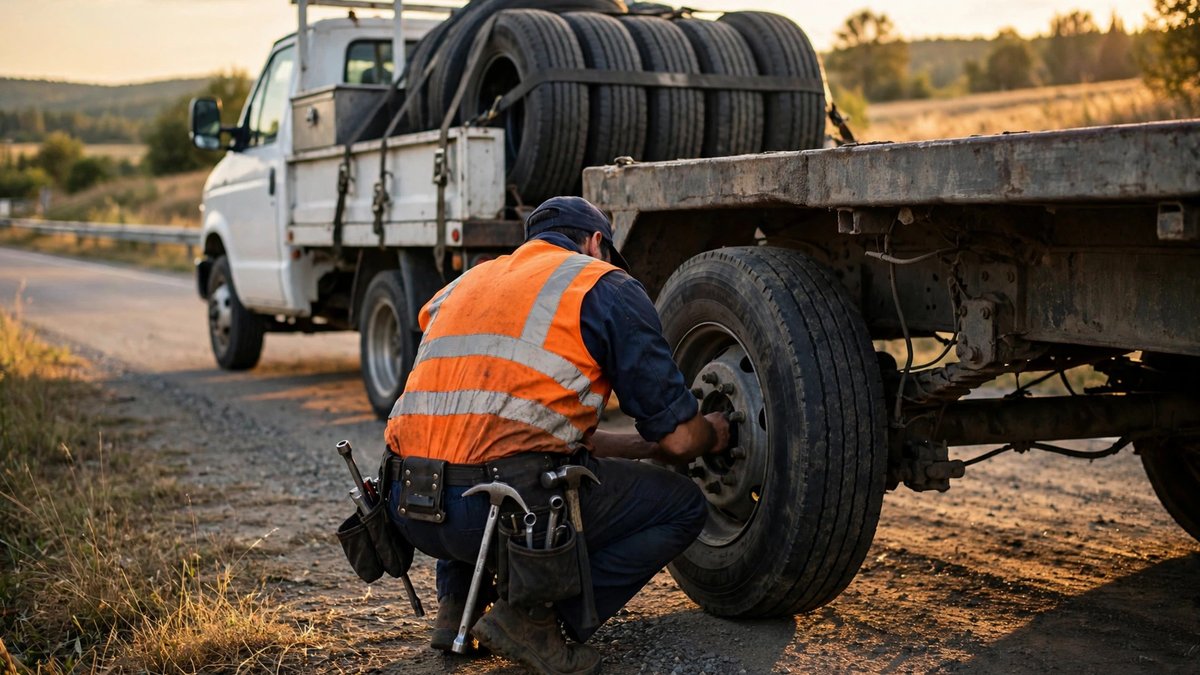
A used tire is a legitimate roadside tool on a drive or trailer position to finish the run — and the wrong answer on a steer position, where matched new tires are the standard.
Position decides: steers carry your steering; trailers carry freight
The question is never "used or new" in the abstract — it is "which position, how far, and what will the shop do when I arrive"
Tread depth you can see and measure, no sidewall damage, no exposed cord, no patches in the sidewall, and a casing age you would accept on your own truck.
Ask the tech to show you the tire before it is mounted — you are buying it either way
Check the DOT date code on the sidewall: a very old casing is a blowout scheduled, not a bargain
A used tire that matches your other tire's size exactly — a mismatched dual pair wears both tires wrong (see the one-dual-flat article in this series)
Steer positions, always as a matched pair plan; and any position when the used offering is thin, damaged, or older than what came off.
Budget new drive/trailer tires run $300–$400 in published roadside ranges; tier-one steers $600–$800 (GTS Roadside)
If the used tire's price is near the budget-new price, the arithmetic already answered the question
Fleet policy may decide for fleet drivers: many fleets forbid used steers and require specific brands — know your policy before the shoulder, not during it
Take the used tire as a bridge when it is sound: it converts a stranded truck into a rolling truck, and the permanent tire decision happens at a shop with choices and daylight.
Note the used tire's position and plan its replacement or inspection at the next shop stop
Keep the invoice — a used tire that fails in days is a conversation with paperwork, not an argument without it
The call is the same: $150–$250 service call (published ranges, GTS Roadside; Road Rescue Network) — only the tire's price changes between the two options.
That is why the decision is about the tire, not the visit: you are choosing casing quality, not service quality