Driver guide · National edition
Published October 30, 2026 · TruckRescueNow driver guide bank, stamped October 2026
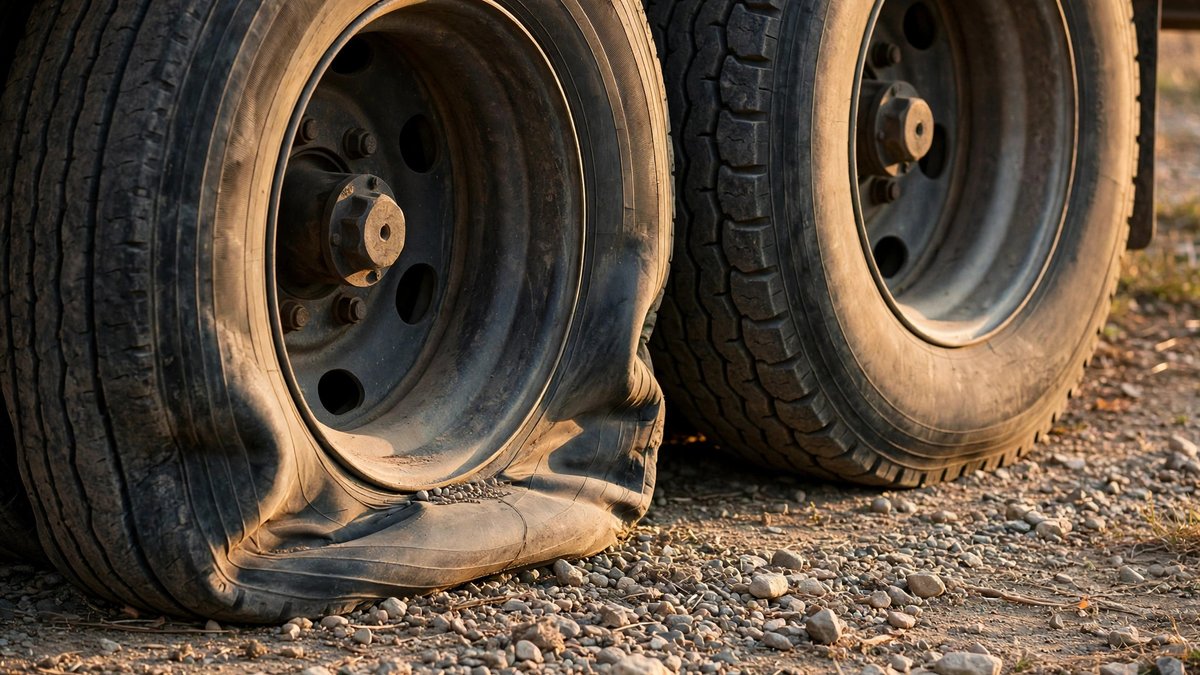
There is no safe distance rating — a dual pair is designed to share the load, and the surviving tire is overloaded from the first revolution.
The surviving tire flexes more, heats faster, and its casing breaks down as you roll
Heat damage is invisible from the cab — the tire can look fine at the stop and fail an hour later
Tire makers and fleet programs treat a run-while-flat mate as a damaged tire, not a good spare
Load doubles on one tire; heat climbs; the flat tire, if it is still mounted, grinds against its mate and the rim.
Two tires rubbing wear through each other's sidewalls
A flat inside dual can run unnoticed for a long stretch — the truck drives almost normally
That invisibility is the trap: the damage bill grows while nothing feels wrong
Thump or gauge every dual at every stop — a flat inside dual hides from a walk-around glance.
Look for a gap difference between the pair and rubber dust at the rim
A temperature gun or a careful hand-near (never on) the sidewall after a stop shows the hot tire
If one dual is flat, have the mate inspected or replaced with it — that is the professional standard, not an upsell
Stop at the next safe place — a parking area or stop near the nearest exit — and get the pair serviced together.
Tell the service truck it is a dual position and which tire (inside or outside) is flat
Ask for the mate's pressure and condition to be checked and stated before you roll
If both tires in the pair are damaged, the service truck needs to know before it leaves its yard
Early: one tire plus the service call — a single-tire event commonly lands $450–$1,050 all-in (GTS Roadside; Road Rescue Network published ranges).
Late: two tires, possible rim damage, and the same service call
The difference between early and late is distance — every mile is paid for in casing life