Driver guide · National edition
Published October 30, 2026 · TruckRescueNow driver guide bank, stamped October 2026
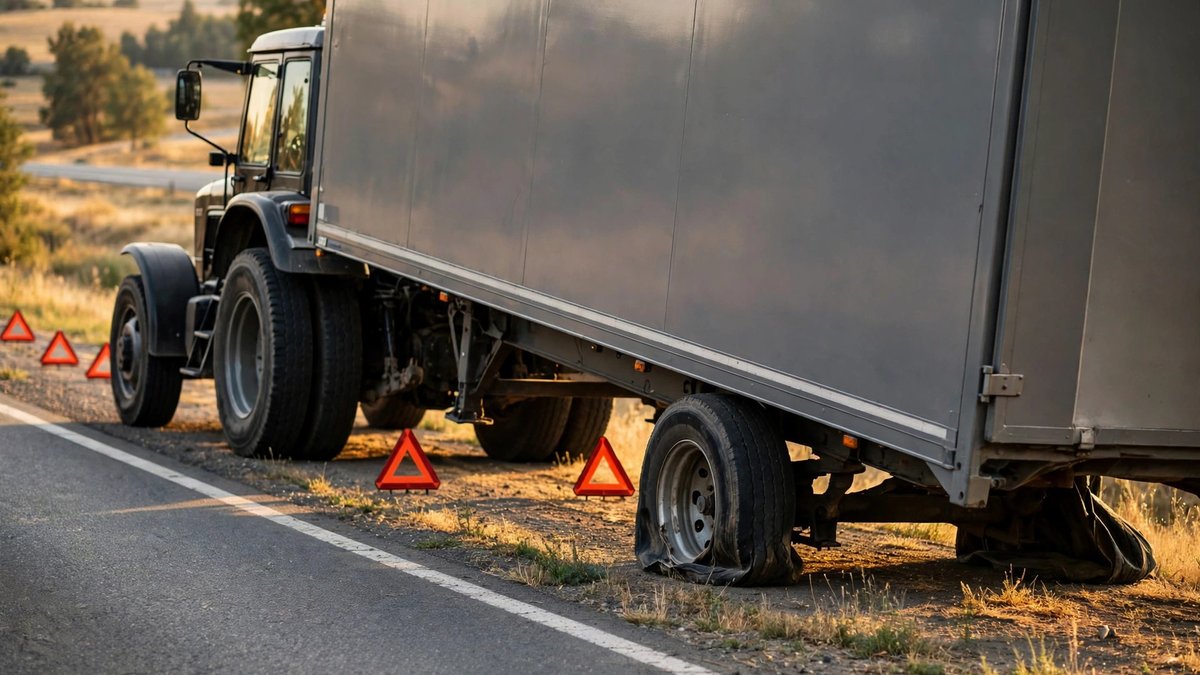
A flat on a dual position is a call, not a drive — the good tire next to it is now carrying double its rated load and failing on a timer.
Every mile on one dual overloads the mate, overheats it, and breaks down its casing
The cheap outcome is: the flat tire replaced where you stop
The expensive outcome is: the flat tire, the destroyed mate, and possibly the rim
Only to get off the travel lane or reach a safe parking spot — low speed, hazards on, the shortest distance possible.
Acceptable: crossing to a wide shoulder, rolling to the exit ramp lot near the nearest exit, reaching a stop parking lot
Not acceptable: "the next town," "the delivery first," or any distance at highway speed
If the tire has come off the bead or is shredding, do not roll at all — flying rubber damages air lines, lights, and other traffic
Check the mate's air pressure with a gauge as soon as you stop — a mate that ran overloaded and low is a suspect tire, even if it looks fine.
Look for sidewall bulges, cracks, and heat you can feel from a foot away
Ask the tire tech to inspect the mate before the truck rolls again
A mate that was run flat-adjacent often fails within the next days if it is not caught
The rule is the same; the risks differ: a drive flat can shred into the fuel tank, air lines, and mudflaps, and a trailer flat can shred into the load, the doors, and the lights.
Trailer tires are 48% of all trailer road calls (FleetNet America road-call data) — the trailer set is the most neglected set in the rig
A trailer flat you cannot see from the cab: pre-trip and post-trip walks are where it gets caught
Drive positions: watch for rubber debris near the tanks and lines before you roll after the repair
A single-tire event commonly lands $450–$1,050 all-in: $150–$250 service call plus the tire — published roadside ranges (GTS Roadside; Road Rescue Network).
Budget drive/trailer tires run $300–$400 for the tire itself in those published ranges
Catching it stopped is one tire; catching it late is two tires and possibly a rim