Three recalls, three walk-around checks: the fuel hose, the hot hub, the landing-gear weld
Daily edition · National roadside core
Published November 3, 2026 · TruckRescueNow daily edition — Day 2
Three defects that are roadside failures
NHTSA issued three commercial recalls on Monday, November 2 — and none of them is shop trivia. A fuel hose that lets go, a wheel end that seizes, and a landing gear that folds are three different ways a working truck becomes a stopped truck.
Together they cover 34,014 trucks and trailers. Each defect also has a tell a driver can check on a walk-around, before the road checks it for him.
That check is the subject of this piece: smell, touch, look — in that order.
Morning Coffee Brief
Monday's NHTSA cycle covers 34,014 trucks and trailers across three recalls — and every one of the three defects ends the same way on the road: the truck stops where it stands.
The biggest is Paccar's: 26,729 Kenworth and Peterbilt medium-duty trucks (2022–27, Cummins L9), where a fuel hose can separate and stall the engine. Paccar estimates about 3% of them carry the defect.
The first owner letters land November 25 (Wabash wheel ends). The walk-around checks in this piece can be done this morning, weeks before any letter arrives.
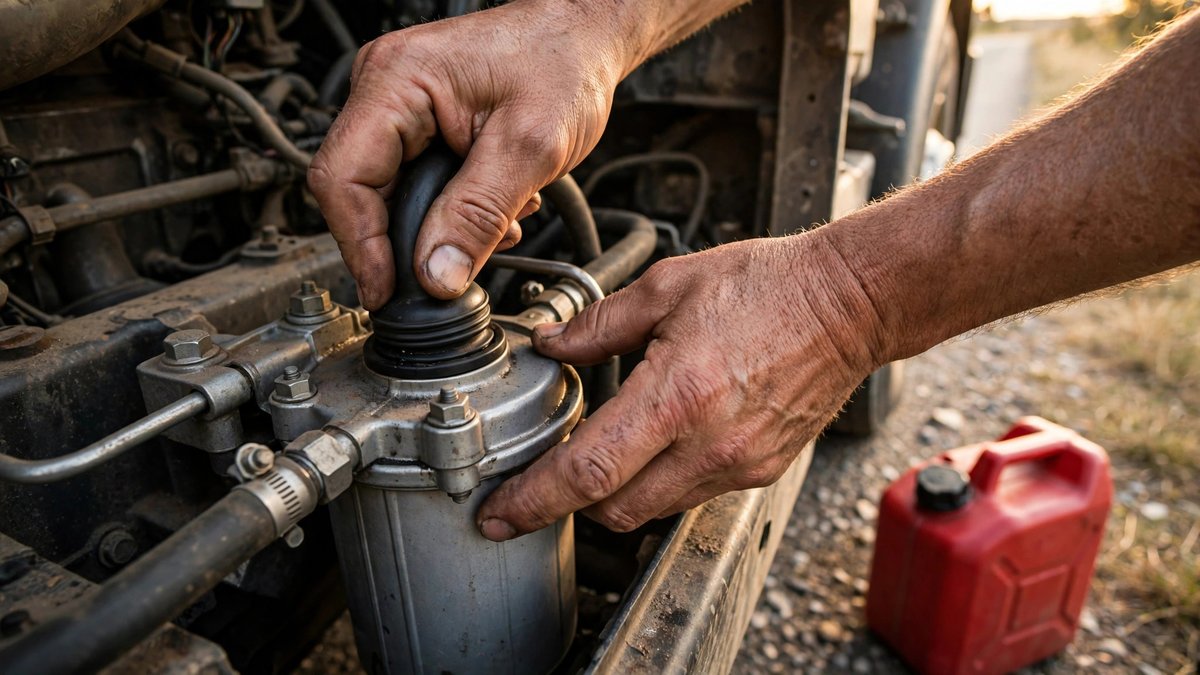
Smell: the Paccar fuel hose
Paccar is recalling 26,729 Kenworth and Peterbilt medium-duty trucks, model years 2022–27, built on the Cummins L9 engine. The remote fuel-filter hoses may separate from their fitting.
A separated hose means a fuel leak, an engine that can stall, and a fire risk on top of both. Owner letters are planned for December 20 — six weeks after the defect was published.
The tell is at the filter: a wet fitting, or diesel smell around the fuel system where it should be dry. Smell diesel on a truck in this range, and the next stop is a shop, not the next delivery.
Touch and look: the hot hub and the cracked weld
Two trailer recalls ride in the same cycle, and each has its own tell:
Touch — Wabash, 475 model-year 2027 van trailers: incorrect wheel-bearing lubricant can seize the wheel end, locking the wheel. A hub running hotter than its neighbors is the warning. Letters November 25 (NHTSA 26V-683).
Look — Great Dane, 6,810 model-year 2027 Champion and Everest vans: landing-gear k-brace welds may fail, and the gear can collapse. About 10% are estimated defective. Read the k-brace welds for cracks before you drop the trailer, not after. Letters in December (NHTSA 26V-708).
Smell — the Paccar fuel fitting, above: wet hose, diesel odor, letters December 20 (NHTSA 26V-700).
Why the check happens now, not when the letter lands
On the road, each of these defects becomes a service call: a leaking, stalled truck is a mobile-repair call with a fire risk attached; a seized wheel end is a tow; a collapsed landing gear is a dropped trailer and a recovery.
Caught on the walk-around, the same three are a dealer appointment — the recall fix is done free, on the shop's floor instead of the shoulder.