Driver guide · National edition
Published October 30, 2026 · TruckRescueNow driver guide bank, stamped October 2026
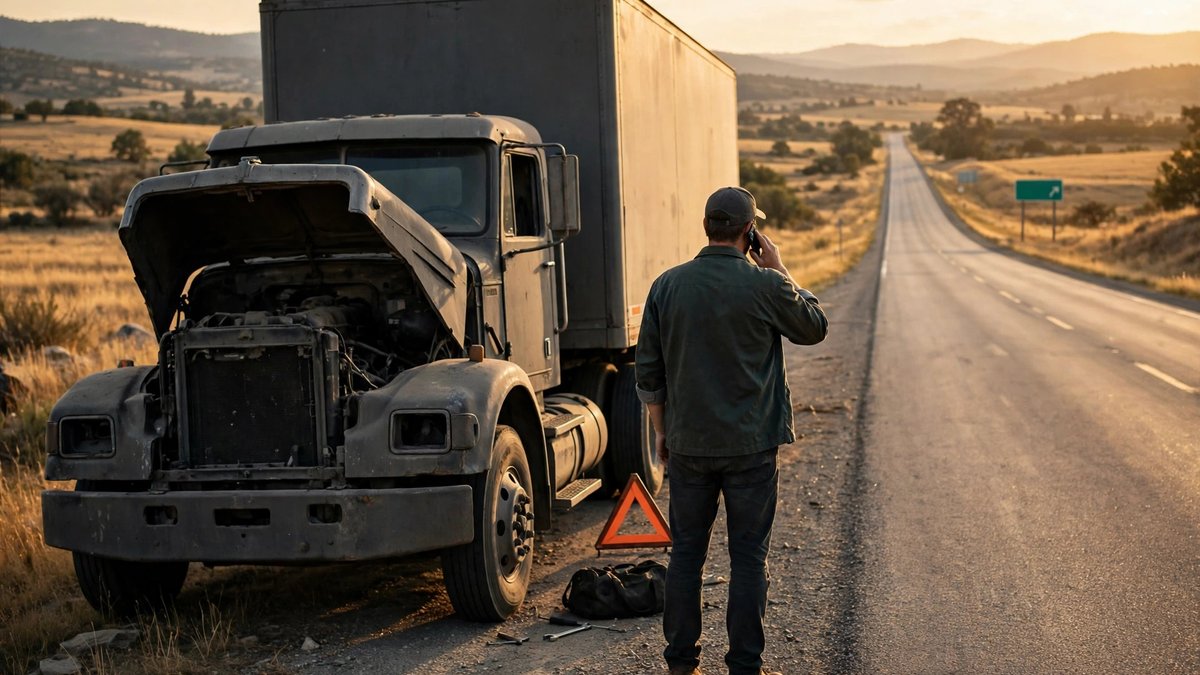
Location, failure, tire/part specifics, load status, safety status, and a callback number that will be answered — in that order, every time.
The order matters: location routes the call, failure loads the truck, specifics prevent the second trip
Working techs name the classic loss plainly: the wrong tire size on the service truck means a second trip, and the job is lost twice
Highway and direction, exit number or mile marker, and the nearest landmark: "eastbound on the highway, just past the last exit" beats a dropped pin in a dead zone.
Which side of the road you are on, and how much shoulder room you have
If you can see a stop, a scale, or a town sign, say its name
If you moved after breaking down (limped to a lot), say where the truck is NOW, not where it died
What broke, where on the truck, and what the truck did: "outside drive tire flat, driver's side" or "cranks, no fire, fuel at half."
Tire calls: position (steer/drive/trailer), side, inside or outside dual, and the size off the sidewall
No-start calls: no crank, slow crank, or cranks-no-fire (see the no-start article in this series)
Air/brake calls: what the gauge reads and whether you hear a leak
A photo of the failure, sent when the operator asks, is worth a paragraph — position, size, and damage in one image
Loaded or empty, reefer or dry, hazmat or not — and whether you are in a safe position or exposed to traffic.
Reefer: the setpoint and current box temperature join the checklist
Traffic-side failure (driver's side) must be said out loud — it changes staging and may change which unit is sent
If anyone is hurt or you are blocking a lane, that is a 911 call first; dispatch for the truck comes second
It is the accept/decline decision each operator makes in seconds, and the load-out decision that follows — complete information is the difference between one trip and two.
Missing size or position = a guess loaded on the truck = your wait doubles when the guess is wrong
Keep the callback number free after you call: the operator's staging call confirms he is rolling and where to meet your hazards