The Saluda Grade test: brakes, cooling, and the clock on I-26 and I-85
Daily edition · Greenville–Spartanburg, South Carolina — I-26 / I-85
Published November 4, 2026 · TruckRescueNow daily edition — Day 3
Two corridors, one test
Greenville–Spartanburg runs on two interstates that test a truck in opposite ways. I-85 is the clock — the Atlanta–Charlotte spine, carrying BMW supplier freight and port drayage on deadlines. I-26 is the grade — the Saluda descent, where the truck itself is what gets examined.
A driver can run this ground for months without trouble. Then one descent on worn brakes, or one climb on a tired cooling system, collects everything the corridor has been lending him.
This piece is the ground itself — no single wreck, no single day. It is what this territory does to trucks, every week of the year.
Morning Coffee Brief
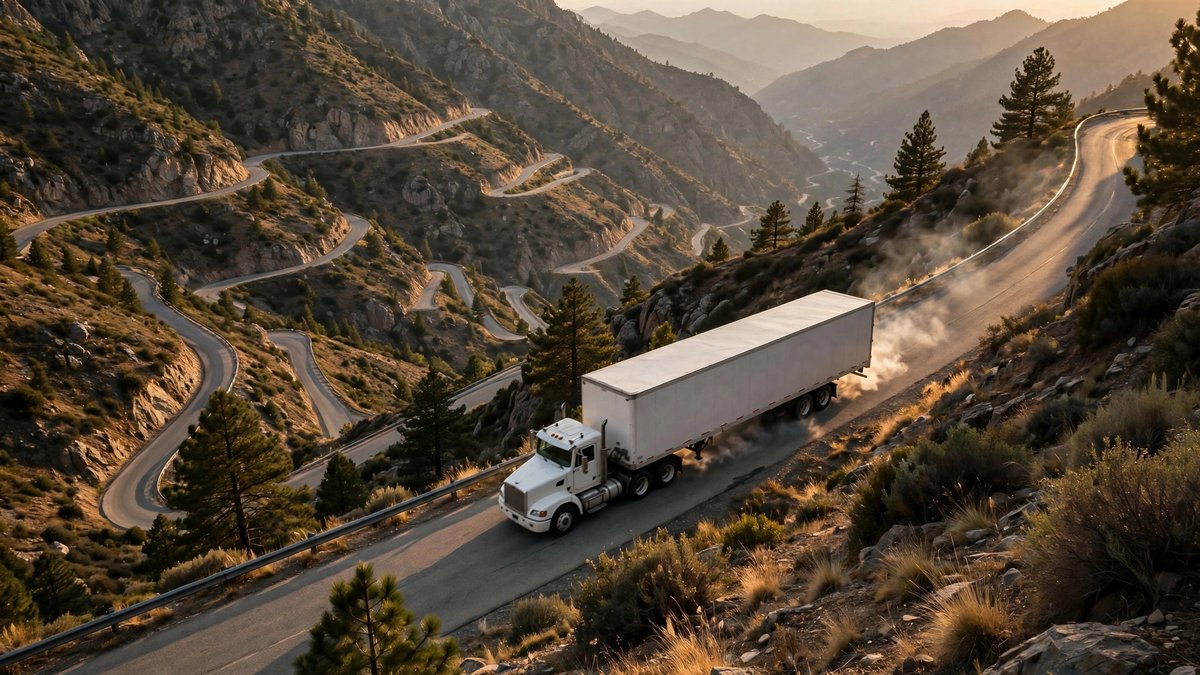
The Saluda Grade on I-26 drops nearly a thousand feet in five miles. Local techs can recite its failure pattern from memory: brakes and cooling systems are what the descent tests.
At I-85 Exit 63 in Duncan, three stops share one exit — TA, Love's and Pilot — and the TA alone holds 187 truck spaces. It is the densest truck-stop exit in the Carolinas, and the corridor still runs short of bays.
The freight explains why: BMW's Spartanburg plant runs its supplier trucks on just-in-time windows, and Inland Port Greer drayage turns containers day and night. A stopped truck here is priced by the hour.
What the Saluda Grade does to brakes and cooling
Nearly a thousand feet of descent in five miles means five miles of braking decisions. Ride the service brakes and they heat; heated brakes fade; faded brakes on a loaded descent are how a manageable grade becomes a runaway problem.
The same ground works the cooling system on the way up. A water pump or hose that was merely tired on flat ground shows it on a long climb, with the temperature gauge as the first witness.
The checks belong at the top, not the bottom: gear selection before the descent, brake feel in the first mile, and a cooling system you trust before the climb starts.
The wait, the approval, and the bill on this ground
When a truck does stop on this corridor, three clocks start at once — and only one of them is the repair:
The approval wait: dispatch or the company has to approve the roadside bill before work starts, and a driver on the shoulder watches that clock in real time.
The bill fight: just-in-time freight makes every hour expensive, which makes every line of the invoice an argument waiting to happen.
The back-on-the-road clock: from the failure to rolling again — the only number the plant, the port, and the driver all feel the same way.
Roadside service on the Greenville–Spartanburg corridor
The work this ground calls for is grade work and deadline work: brake service that can answer a fade before it becomes a fire, cooling repairs on the shoulder, tire service, and a heavy tow when the descent has already decided.
The Exit 63 cluster in Duncan — TA, Love's and Pilot at one exit, 187 spaces at the TA alone — is the corridor's anchor ground, where service stages from and where a driver with a sick truck should aim while the truck still rolls.