Driver guide · National edition
Published October 30, 2026 · TruckRescueNow driver guide bank, stamped October 2026
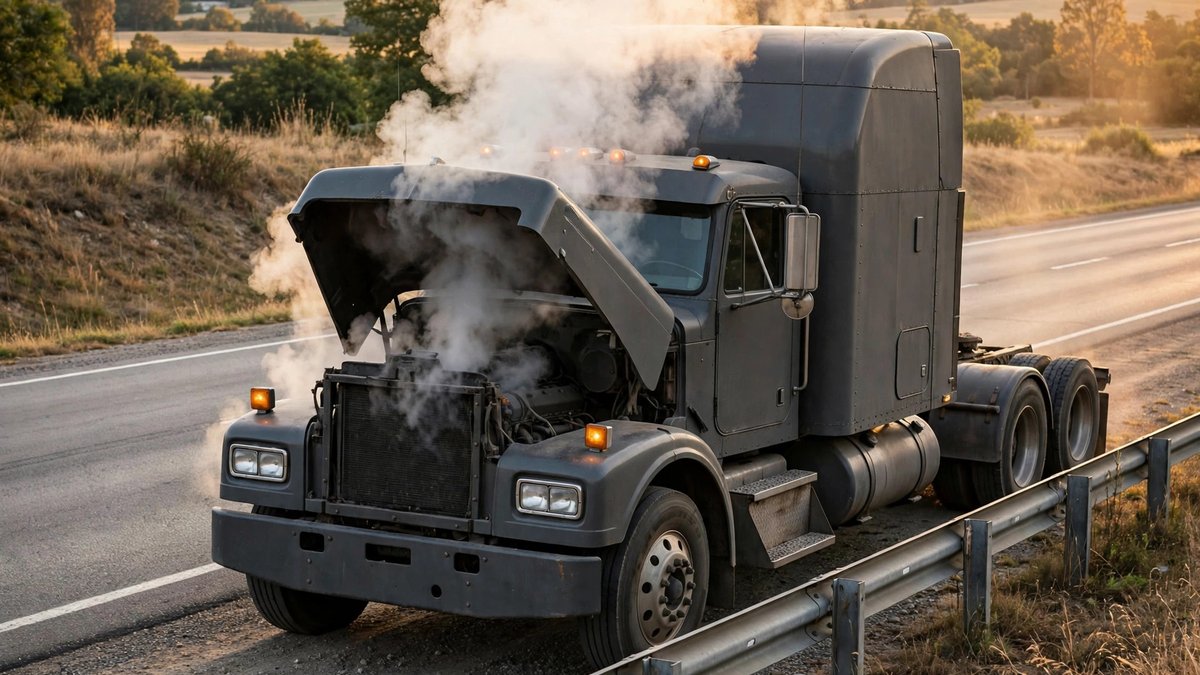
Stop early. An engine run hot "just to the next exit" is how a hose problem becomes a head-gasket or in-frame problem.
The temperature gauge is a bill being written in real time
Pull off at the first safe place — a wide shoulder or the lot near the nearest exit
Turn the cab heater to full hot while you stop — it pulls a small amount of heat off the engine and costs you nothing
Never open the radiator or surge-tank cap on a hot engine — pressurized coolant erupts and causes severe burns.
Let the engine cool before any cap comes off — cooling takes real time, not minutes
Never pour cold water into a hot, empty system — the thermal shock can crack components
Never keep driving with the gauge pegged and the warning on
Coolant level in the surge tank first — low coolant is the message; where it went is the diagnosis.
Look under the truck and around the engine for the leak: hoses, clamps, the water pump weep hole, the radiator seams
Check the fan and its drive: a fan that is not engaging lets the truck run fine on the flat and boil on a grade
Check the radiator face for debris — bugs, bags, and road film blanket airflow
A belt that is off or shredded explains both overheating and a charging warning together
Low coolant from a leak, a failed water pump, a stuck thermostat, a fan that will not engage, and a plugged radiator — in roughly that order on roadside calls.
Cooling failures are a lead highway-breakdown cluster (Road Rescue Network) — service trucks carry pumps, hoses, and clamps for this pattern
An oil-contaminated or fuel-smelling coolant points deeper — that is a shop diagnosis, say so on the call
Roadside cooling work commonly lands in the $500–$1,500 band with parts (industry rate norms via published roadside pricing) — an engine run hot into failure is a five-figure event.
That ratio is the whole article: the stop is the cheap decision even when it feels like the expensive one
Tell the dispatcher "overheating" and whether coolant is on the ground — it decides hose-and-fill versus water pump on the truck that rolls