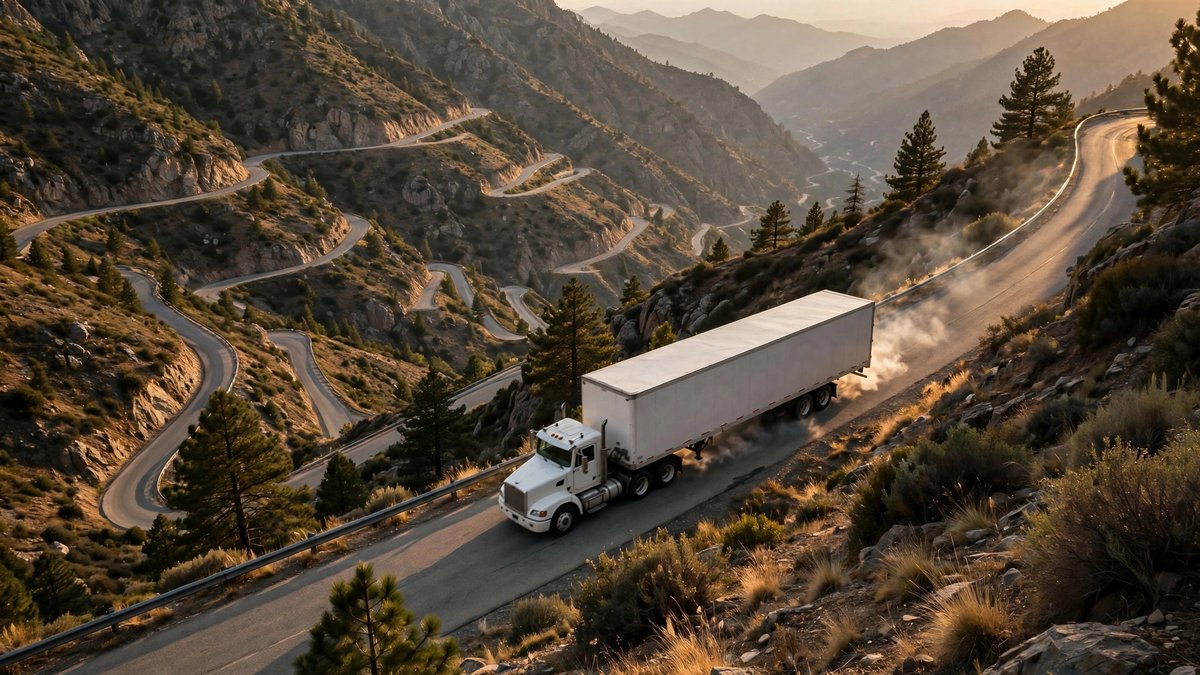
Daily edition · Wolf Creek Pass, Colorado — US-160
Published November 2, 2026 · TruckRescueNow daily edition — Day 1
The winter storm over the San Juans lets go this afternoon — and the most dangerous miles on US-160 are still the eight miles down from Wolf Creek Pass.
The warnings expire between 11 a.m. and 2 p.m. today. The grade does not expire at all: 7 percent, for more than eight miles, off the summit.
Every truck that crosses today makes the same decision at the top: check the brakes at the summit, or meet them again at the hairpin.
Colorado DOT's guidance for this pass is a discipline, not a suggestion — and it happens before the descent, at the top:
This failure does not arrive silently. Last week a trailer's brakes caught fire on I-5 at Tacoma. In Hudson, Iowa, a truck's brake drums overheated the same way, without the flames.
Heat caught at a summit check is a stop and a cool-down. Heat caught at the hairpin is a runaway ramp — or worse.
The check costs ten minutes at the top of the pass. The alternative costs whatever the ramp costs.
A brake problem found at the summit is a service call on flat ground. A brake problem found on the descent is a recovery.
Roadside help for a pass like this stages from the valley towns at either end — one more reason the summit check matters: the top is the last place a service truck can reach you on the flat.
If the hubs are hot, the pedal feels wrong, or the brakes are already talking to you, do not descend on hope. What to do when your brakes are smoking on a grade is the guide for the moment itself, and what brakes out of adjustment actually means covers the check behind it.