Driver guide · National edition
Published October 30, 2026 · TruckRescueNow driver guide bank, stamped October 2026
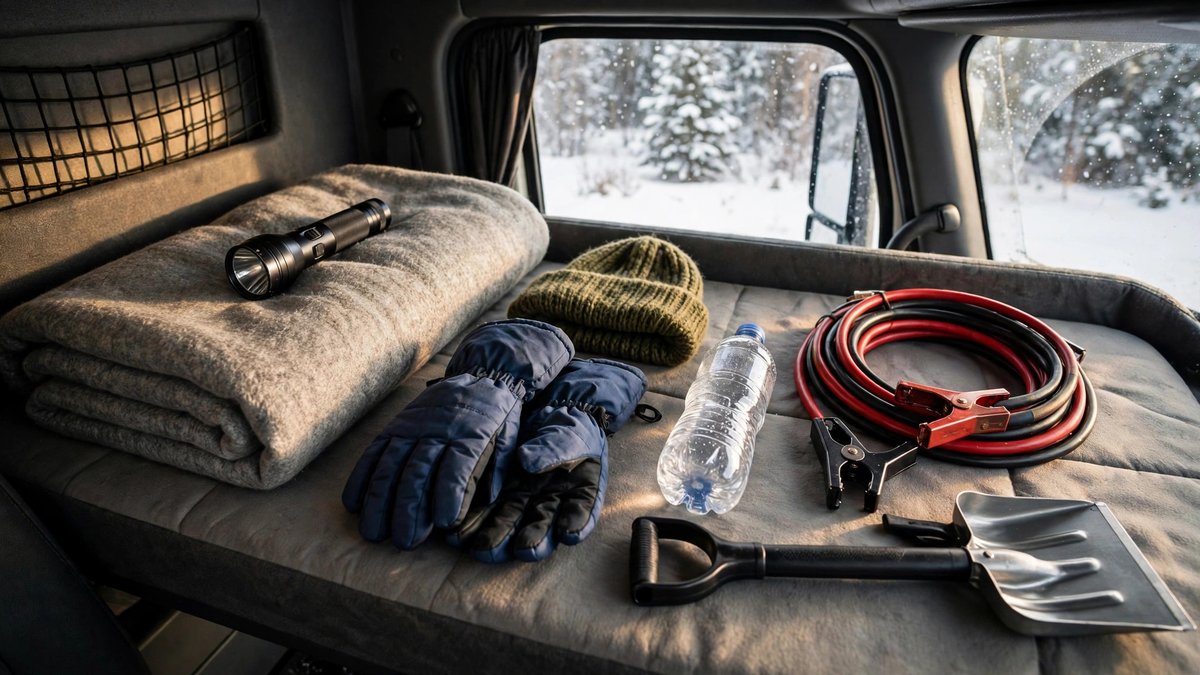
Keep you alive, visible, and able to wait safely for help in sub-freezing weather — in that order.
A winter breakdown is a survival problem first and a repair problem second
A truck that cannot run cannot heat the cab — your kit is the heat plan when the engine is off
A rated sleeping bag or heavy blankets, a full change of dry clothes, insulated coveralls, winter boots, two pairs of gloves, and a stocking hat and balaclava.
Layers you can work in — you may have to chain, walk, or place triangles in the cold
Chemical hand and foot warmers — cheap, flat, and they work for hours
A way to heat the cab without the engine where your company allows it — and the fuel discipline not to idle the truck dry trying
Water that will not freeze solid in a bottle you can thaw, shelf-stable food for 48 hours, and a flashlight plus headlamp with spare batteries.
Cold kills batteries — including the ones in your flashlight; keep spares warm and rotated
A phone charging cable and a power bank, charged — your phone is the rescue tool, treat its battery like fuel
Medications for several days beyond the plan, not the exact plan
Triangles and a reflective vest (year-round law and sense), jumper capability where your company equips it, a tire gauge, basic hand tools, penetrating oil, spare fuel filter, and the winter front where your engine uses one.
Fuel anti-gel additive bought BEFORE the cold snap, added before fueling when temperatures fall (see the cold-start article in this series)
Sand or kitty litter for traction under the drives, and chains where your routes and the law require them — and the knowledge of how your set installs, practiced before the storm
Spare wiper blades and washer fluid rated for the cold — visibility failures strand trucks too
In extreme cold with no heat, staying with the truck is the default — it is the shelter, the landmark, and what rescuers are looking for.
If you must walk for help, leave a note with your direction, time, and callback number, and stay on the road, never cross-country
Tell dispatch and the service operator exactly where the truck is on the highway near the nearest exit before your phone is your only heat source of information